Buy babybrands.eu ?
We are moving the project
babybrands.eu .
Are you interested in purchasing the domain
babybrands.eu ?
domain@kv-gmbh.de · 0541-91531010
Buy babybrands.eu ?
Why do ethers have only weak dipole-dipole interactions?
Ethers have only weak dipole-dipole interactions because the oxygen atom in the ether molecule is less electronegative than the oxygen atom in alcohols or the nitrogen atom in amines. This results in a smaller difference in electronegativity between the oxygen and the carbon atoms in the ether molecule, leading to weaker dipole moments. As a result, the overall dipole-dipole interactions in ethers are weaker compared to molecules with larger electronegativity differences, such as alcohols and amines. **
How do dipole-dipole forces affect the boiling temperature?
Dipole-dipole forces are attractive forces between the positive end of one polar molecule and the negative end of another polar molecule. These forces cause the molecules to be attracted to each other and stick together, making it more difficult for them to break apart and become a gas. As a result, substances with stronger dipole-dipole forces will have higher boiling temperatures because more energy is required to overcome these attractive forces and turn the substance into a gas. Therefore, the presence of dipole-dipole forces can increase the boiling temperature of a substance. **

Similar search terms for Dipole
Top-Angebote
Products related to Dipole:
-
Uplift Essentials Safety Eye Installation Tool For Plush Toys And Crochet Projects purpleSimplify your plush toy and crochet crafting with the Safety Eye Installation Tool the musthave accessory for securely attaching safety eyes and washers. Designed to fit sizes from 5mm to 30mm, this tool helps you install eyes evenly and safely...41,97 $*Shipping: 0,00 $Secure redirect to the provider
-
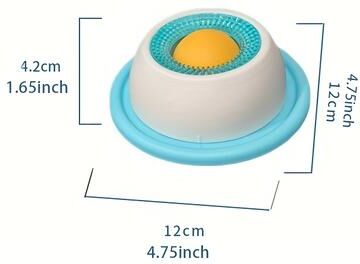
Inspire Daily Merch Slow Feeder For Dogs Interactive Lick Toys Food Dispenser Cat Feeding Crate Accessory blueInteractive Lick Toys for Dogs Our interactive dog toys are designed to provide hours of enjoyment while also promoting healthy eating habits. The lick toys for dogs are ideal for reducing anxiety and boredom, especially for dogs that are left alone...31,97 $*Shipping: 0,00 $Secure redirect to the provider
-
Kodotan sofa Kids Bookshelf and Toy Storage Organizer, Montessori Bookcase for Nursery, Wooden & Fabric Book Shelf with Anti-Tip SafetyThis kids bookshelf combines safe construction with a child-friendly height, encouraging toddlers to independently choose and organize their books.108,49 $*Shipping: 0,00 $Secure redirect to the provider
-
PetsAreLife Aquarium Feeding Tube Aquarium Feeding TubeChanging the water after each meal of your aquatics takes a long time. And if you'll ignore changing the water, the water pollution will badly impact your aquatics. Get your aquatics healthy and stay free from waterchanging hassle with our Aquarium...24,97 $*Shipping: 0,00 $Secure redirect to the provider




-
Why are hydrogen bonds stronger than dipole-dipole interactions?
Hydrogen bonds are stronger than dipole-dipole interactions because they involve a specific interaction between a hydrogen atom and a highly electronegative atom such as oxygen, nitrogen, or fluorine. This creates a strong partial positive charge on the hydrogen atom and a strong partial negative charge on the electronegative atom, leading to a strong attraction between the two. In contrast, dipole-dipole interactions occur between the partial positive and negative charges of polar molecules, which are generally weaker than the specific interaction between a hydrogen atom and a highly electronegative atom in a hydrogen bond. **
-
Is the ammonia molecule a dipole or not a dipole?
The ammonia molecule is a dipole. This is because the molecule has a trigonal pyramidal shape with a lone pair of electrons on the nitrogen atom. The electronegativity difference between nitrogen and hydrogen causes the molecule to have a net dipole moment, with the nitrogen end being partially negative and the hydrogen end being partially positive. This makes ammonia a polar molecule. **
-
Why is CO2 not a dipole and H2O a dipole?
CO2 is not a dipole because it has a linear molecular geometry, meaning the two oxygen atoms are symmetrically arranged around the central carbon atom, resulting in a net dipole moment of zero. On the other hand, H2O is a dipole because it has a bent molecular geometry, causing the oxygen atom to pull the shared electrons closer to itself, resulting in a net dipole moment. This uneven distribution of charge creates a positive end (the hydrogen atoms) and a negative end (the oxygen atom), making H2O a polar molecule. **
-
What is the difference between hydrogen bonding and dipole-dipole interactions?
Hydrogen bonding is a specific type of dipole-dipole interaction that occurs between a hydrogen atom bonded to a highly electronegative atom (such as oxygen, nitrogen, or fluorine) and another electronegative atom in a different molecule. This type of interaction is stronger than regular dipole-dipole interactions because of the large electronegativity difference between the hydrogen and the other atom, resulting in a stronger attraction between the molecules. In contrast, dipole-dipole interactions occur between the positive end of one polar molecule and the negative end of another polar molecule, but do not involve a hydrogen atom bonded to a highly electronegative atom. **


What is the difference between a dipole and a non-dipole?
A dipole is a molecule that has a separation of positive and negative charges, resulting in a net dipole moment. This means that the molecule has a non-uniform distribution of electron density, leading to a partial positive and partial negative charge. On the other hand, a non-dipole molecule has a symmetrical distribution of electron density, resulting in no net dipole moment. This means that the molecule does not have a separation of positive and negative charges, and therefore does not exhibit dipole-dipole interactions. **
When do Van der Waals forces and dipole-dipole interactions occur?
Van der Waals forces occur between all atoms and molecules, regardless of their polarity, due to temporary fluctuations in electron distribution. Dipole-dipole interactions, on the other hand, occur between polar molecules that have a permanent separation of positive and negative charges. Both types of interactions are important in determining the physical properties of substances, such as their boiling and melting points, and play a significant role in the behavior of gases, liquids, and solids. **
Top-Angebote
Products related to Dipole:
-
Multicon Wholesale Hub Pet Feeding Station With Storage & Raised Dog Bowls Organizer For Food & Toys Pet Feeding Station With Storage & Raised Dog Bowls Organizer For Food & ToysKeep your dog's essentials organized with this multifunctional pet feeding station. Designed for easy access, this station features a raised bowl stand and ample storage for dog food, toys, and treats. Whether you're looking to declutter your...178,97 $*Shipping: 0,00 $Secure redirect to the provider
-
Perfect Picks Market Puppy Training Enrichment, Interactive Dog Toys, Cat Feeding Crate Accessory blueBoost Your Dogs Health and Happiness with Interactive Dog Toys Give your dog a new, exciting way to enjoy feeding time with these interactive dog toys. The unique design of these lick toys for dogs promotes healthy chewing habits and helps reduce...29,97 $*Shipping: 0,00 $Secure redirect to the provider
-
Uplift Essentials Safety Eye Installation Tool For Plush Toys And Crochet Projects purpleSimplify your plush toy and crochet crafting with the Safety Eye Installation Tool the musthave accessory for securely attaching safety eyes and washers. Designed to fit sizes from 5mm to 30mm, this tool helps you install eyes evenly and safely...41,97 $*Shipping: 0,00 $Secure redirect to the provider
-
Inspire Daily Merch Slow Feeder For Dogs Interactive Lick Toys Food Dispenser Cat Feeding Crate Accessory blueInteractive Lick Toys for Dogs Our interactive dog toys are designed to provide hours of enjoyment while also promoting healthy eating habits. The lick toys for dogs are ideal for reducing anxiety and boredom, especially for dogs that are left alone...31,97 $*Shipping: 0,00 $Secure redirect to the provider
-
Why do ethers have only weak dipole-dipole interactions?
Ethers have only weak dipole-dipole interactions because the oxygen atom in the ether molecule is less electronegative than the oxygen atom in alcohols or the nitrogen atom in amines. This results in a smaller difference in electronegativity between the oxygen and the carbon atoms in the ether molecule, leading to weaker dipole moments. As a result, the overall dipole-dipole interactions in ethers are weaker compared to molecules with larger electronegativity differences, such as alcohols and amines. **
-
How do dipole-dipole forces affect the boiling temperature?
Dipole-dipole forces are attractive forces between the positive end of one polar molecule and the negative end of another polar molecule. These forces cause the molecules to be attracted to each other and stick together, making it more difficult for them to break apart and become a gas. As a result, substances with stronger dipole-dipole forces will have higher boiling temperatures because more energy is required to overcome these attractive forces and turn the substance into a gas. Therefore, the presence of dipole-dipole forces can increase the boiling temperature of a substance. **
-
Why are hydrogen bonds stronger than dipole-dipole interactions?
Hydrogen bonds are stronger than dipole-dipole interactions because they involve a specific interaction between a hydrogen atom and a highly electronegative atom such as oxygen, nitrogen, or fluorine. This creates a strong partial positive charge on the hydrogen atom and a strong partial negative charge on the electronegative atom, leading to a strong attraction between the two. In contrast, dipole-dipole interactions occur between the partial positive and negative charges of polar molecules, which are generally weaker than the specific interaction between a hydrogen atom and a highly electronegative atom in a hydrogen bond. **
-
Is the ammonia molecule a dipole or not a dipole?
The ammonia molecule is a dipole. This is because the molecule has a trigonal pyramidal shape with a lone pair of electrons on the nitrogen atom. The electronegativity difference between nitrogen and hydrogen causes the molecule to have a net dipole moment, with the nitrogen end being partially negative and the hydrogen end being partially positive. This makes ammonia a polar molecule. **
Similar search terms for Dipole
-
Kodotan sofa Kids Bookshelf and Toy Storage Organizer, Montessori Bookcase for Nursery, Wooden & Fabric Book Shelf with Anti-Tip SafetyThis kids bookshelf combines safe construction with a child-friendly height, encouraging toddlers to independently choose and organize their books.108,49 $*Shipping: 0,00 $Secure redirect to the provider
-
PetsAreLife Aquarium Feeding Tube Aquarium Feeding TubeChanging the water after each meal of your aquatics takes a long time. And if you'll ignore changing the water, the water pollution will badly impact your aquatics. Get your aquatics healthy and stay free from waterchanging hassle with our Aquarium...24,97 $*Shipping: 0,00 $Secure redirect to the provider
-
Perfect Picks Market Dog Puppy Toy Set For Kids, Mini Pet Care Play Kit With Cage, Grooming & Feeding Toys For Toddlers blueEngaging Mini Pet Care Play Set for Kids: Bring the joy of pet care to life with the Mini Pet Care Play Set, designed for kids who love animals. This funfilled set includes a puppy toy, grooming tools, feeding accessories, and a vet kit with a cage...31,97 $*Shipping: 0,00 $Secure redirect to the provider
-
Perfect Picks Market Puppy Training Enrichment, Interactive Dog Toys, Cat Feeding Crate Accessory orangeBoost Your Dogs Health and Happiness with Interactive Dog Toys Give your dog a new, exciting way to enjoy feeding time with these interactive dog toys. The unique design of these lick toys for dogs promotes healthy chewing habits and helps reduce...29,97 $*Shipping: 0,00 $Secure redirect to the provider
-
Why is CO2 not a dipole and H2O a dipole?
CO2 is not a dipole because it has a linear molecular geometry, meaning the two oxygen atoms are symmetrically arranged around the central carbon atom, resulting in a net dipole moment of zero. On the other hand, H2O is a dipole because it has a bent molecular geometry, causing the oxygen atom to pull the shared electrons closer to itself, resulting in a net dipole moment. This uneven distribution of charge creates a positive end (the hydrogen atoms) and a negative end (the oxygen atom), making H2O a polar molecule. **
-
What is the difference between hydrogen bonding and dipole-dipole interactions?
Hydrogen bonding is a specific type of dipole-dipole interaction that occurs between a hydrogen atom bonded to a highly electronegative atom (such as oxygen, nitrogen, or fluorine) and another electronegative atom in a different molecule. This type of interaction is stronger than regular dipole-dipole interactions because of the large electronegativity difference between the hydrogen and the other atom, resulting in a stronger attraction between the molecules. In contrast, dipole-dipole interactions occur between the positive end of one polar molecule and the negative end of another polar molecule, but do not involve a hydrogen atom bonded to a highly electronegative atom. **
-
What is the difference between a dipole and a non-dipole?
A dipole is a molecule that has a separation of positive and negative charges, resulting in a net dipole moment. This means that the molecule has a non-uniform distribution of electron density, leading to a partial positive and partial negative charge. On the other hand, a non-dipole molecule has a symmetrical distribution of electron density, resulting in no net dipole moment. This means that the molecule does not have a separation of positive and negative charges, and therefore does not exhibit dipole-dipole interactions. **
-
When do Van der Waals forces and dipole-dipole interactions occur?
Van der Waals forces occur between all atoms and molecules, regardless of their polarity, due to temporary fluctuations in electron distribution. Dipole-dipole interactions, on the other hand, occur between polar molecules that have a permanent separation of positive and negative charges. Both types of interactions are important in determining the physical properties of substances, such as their boiling and melting points, and play a significant role in the behavior of gases, liquids, and solids. **
* All prices are inclusive of VAT and, if applicable, plus shipping costs. The offer information is based on the details provided by the respective shop and is updated through automated processes. Real-time updates do not occur, so deviations can occur in individual cases. ** Note: Parts of this content were created by AI.